
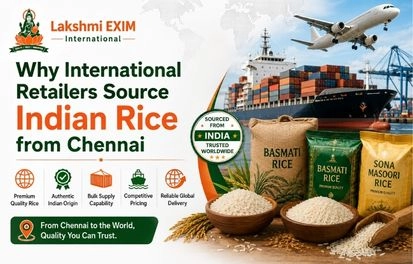
Ask most people what Indian rice means and they’ll picture basmati, long-grained, aromatic, expensive. That’s not actually where the volume is. Chennai’s rice trade runs largely on non-basmati varieties, Sona Masuri, Ponni, IR-64, Swarna, and international retailers looking to source from South India need to understand that distinction before they get anywhere near a supplier.
Know What Chennai Actually Specialises In
Chennai and Tuticorin together move roughly three million tonnes of rice a year, most of it heading to Southeast Asia and the Middle East. What makes South Indian rice distinctive isn’t just the variety names, it’s the growing conditions. Sona Masuri and Ponni are shorter-grain, lighter varieties that cook differently to the long-grain basmati grown up north, and they’ve built a genuine following in markets that prefer that texture, particularly across Southeast Asia and parts of the Gulf. A buyer assuming all Indian rice behaves the same way in the pot is going to have an awkward conversation with their own customers eventually.
The Certification Isn’t Optional, and It’s Not Just One Document
Every legitimate rice exporter in India needs an RCMC, the Registration-cum-Membership Certificate, from APEDA before a single container leaves port. That much is non-negotiable. What catches out newer buyers is assuming that’s the end of the paperwork. It isn’t. Saudi Arabia only accepts rice from establishments accredited by the SFDA. The EU, as of April 2026, requires a Certificate of Inspection from the Export Inspection Council for specific rice categories, a requirement that was briefly waived for some European destinations but is due to come back into force from October 2026. An APEDA certified rice exporter who genuinely understands destination-specific rules, rather than just holding the base certificate, is worth considerably more than one who treats every market the same way.
Ask for the Numbers, Not Just the Sample
A good sample tells you almost nothing about what a full container will look like. What actually matters is moisture content, industry standard sits under 14 per cent, broken grain percentage, and foreign matter content, and a serious South Indian rice export supplier should be able to quote these figures for a specific batch, not just describe the rice as premium quality and leave it there. Ask what percentage of broken grain the shipment carries. Ask for the moisture reading from the batch being loaded, not a general spec sheet. Suppliers who hesitate on this are usually the ones who haven’t tested recently.
Packaging Decisions That Actually Affect Shelf Life
Rice shipped in standard 25kg or 50kg polypropylene bags with a polyethylene liner holds up considerably better on long sea routes than rice packed without one, particularly on routes through humid climates where a container can sit at port for longer than planned. It sounds like a minor detail until a shipment arrives with clumping or moisture damage that wasn’t there when it left Chennai. Ask a prospective exporter directly what their standard packaging setup is, and whether they adjust it for particularly humid destination markets rather than using one packaging standard regardless of where the container is headed.
Pricing That Makes Sense for the Grade You’re Actually Buying
Non-basmati rice out of India has traded broadly in the $400 to $560 per tonne range depending on breakage levels and whether the rice is parboiled or raw, a considerably wider spread than the number on a single quote sheet might suggest. A quote sitting well outside that range in either direction is worth questioning rather than accepting at face value, since unusually low pricing often correlates with corners cut on grading or moisture control, and it tends to surface only once the container is already at sea.
What Does This Means for Building a Reliable Rice Supply Chain?
Retailers sourcing rice from Chennai repeatedly, rather than as a one-off order, do better when they treat the relationship as an ongoing quality conversation rather than a single transaction. That means an exporter who can produce batch-specific test results without being chased for them, who understands which destination markets need which certificates, and which packages rice for the actual journey it’s about to take rather than however it happens to be packed that week. Lakshmi Exim International works with international buyers on that basis, sourcing Sona Masuri, Ponni, and other South Indian varieties with the documentation and consistency that a repeat rice supply relationship actually needs.